The Metaphor that Can Help Reframe Sin, Shame & Adversity
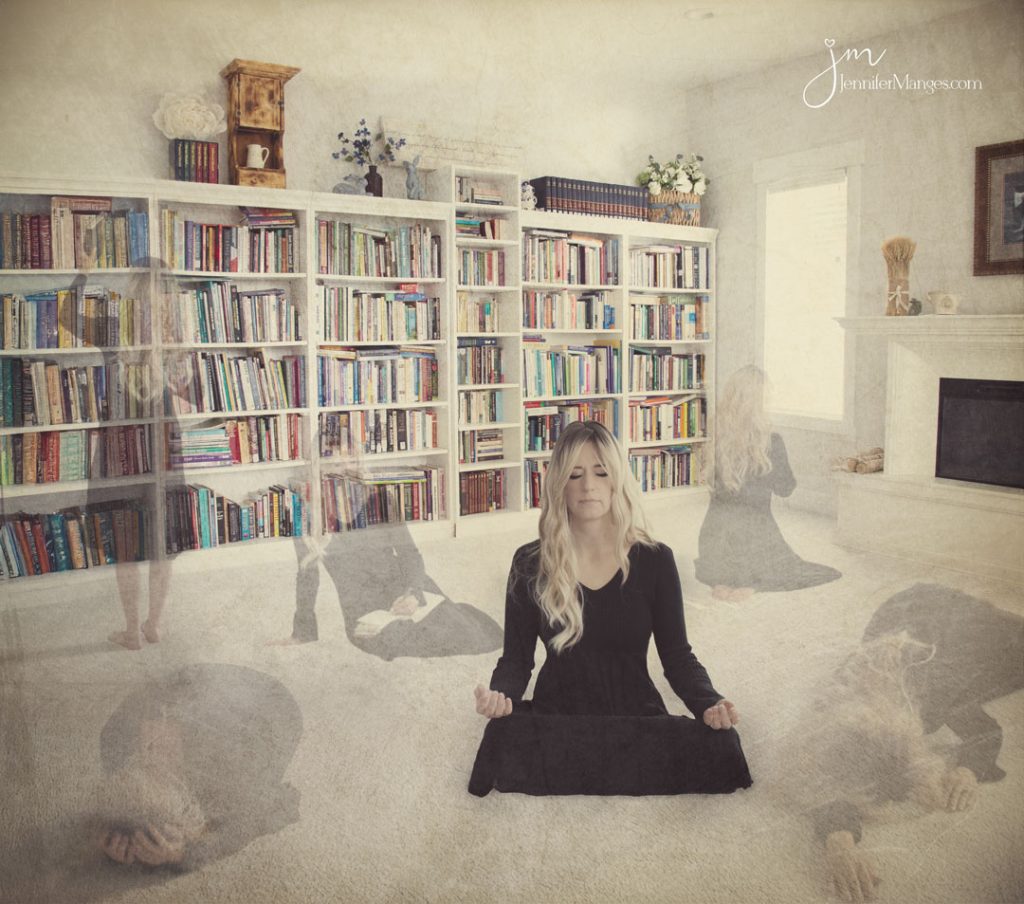
If you’ve ever felt like life is a test, a marathon, a roller coaster, or some other metaphor that implies difficulty, you are not alone. Today, I’d like to introduce a metaphor that has the potential to free up some of the heaviness associated with common religious comparisons and put earth life into a less damning and more spiritually sensible framework.
Let’s start off, right away, with that analogy, and it is as follows:
Life is a classroom.
Yes, life is difficult. Yes, life is challenging, but more than anything, life is an education. We are meant to learn, grow and become—and if you haven’t listened to episode one on the mustard seed, about divine identity and becoming, I’d invite you check it out.
Adam and Eve were placed in the Garden of Eden and partook of the fruit of the Tree of Knowledge of Good and Evil. They were to learn by their own experience the evil from the good, and to repent as part of the process of learning. Why? Because making choices inevitably leads to failures and sins of many kinds and degrees. And because God loves his children (which we are) he provided a way whereby to correct mistakes and mis-steps—repentance, made possible through Jesus Christ.
I grew up with very black and white thinking about sin and somehow came to believe that it’s better not to sin than to have to repent. I don’t think this perspective was intentionally thrust upon me, but it was definitely enculturated into me, and is very common among church-goers of my faith. You can imagine how this line of thinking might produce not only shame at the slightest mis-step, and feelings of never being good enough, but also self-righteousness in thinking that your purity is what will somehow save you, or qualify you for God’s grace (which by the way, is already given without condition).
I now find this whole vein of thinking to be pretty anti-Christ because Christ’s role as Redeemer is central to the faith, and to rely on self-purity over Godly atonement is a rejection of both Jesus and his sacrifice.
We were not put on this earth to be perfect. We were put on this earth to learn. That statement isn’t a justification of sin, but an acknowledgement that it is an inescapable part of this life. Trying to live a sinless life, is not only impossible, but also massively stress-inducing and sets you up for self-rejection. It can make every mistake feel like an earthquake, rather than the crack in the sidewalk that it probably is.
When we approach life as a classroom, many perceived burdens fall into their proper place. Sin becomes a lesson, not a shame you define yourself by. Challenges become learning experiences that educate you to wisdom and make you smarter and stronger. Life becomes an educational opportunity rather than a weight. And a process, rather than a series of linear boxes we check off to feel worthy.
If life is a classroom, we can move from class to class, learning new skills and acquiring new knowledge without having to worry about getting everything right. We are here to learn and that means we will make mistakes as we practice. Jesus knew this would be the case. That’s the whole point of the Atonement, to allow us to mess up while we practice acquiring knowledge through experience. This experience includes what we call sin.
Sin is part of the classroom. It is an education by uncomfortable experience. And if we turn to God, he can wipe the slate clean and we can move on to new lessons.
The prodigal son is the perfect example of someone stuck in the classroom of sin. He kept repeating the same course material over and over until he finally found himself languishing with pigs and didn’t like the results. He learned his lesson, even if it took him a while. And here’s the important part: The moment he returned to his father and acknowledged his folly; he was welcomed and loved and rejoiced over. He was then able to move into new classrooms, with powerful lived experience under his belt to inform his future decisions and behaviors. That’s the beauty of repentance and the classroom.
We tend to look at sin through shame-filled lenses. We judge ourselves and others as bad, or messed up, or lost, because they’re taking different course-work than we are. But because each of us has a customized curriculum or “degree plan”, there is no judgement involved in The Master’s classroom. He is ever present and ready to instruct, guide, and forgive each student in the class individually.
The word ‘sin’ comes from the Hebrew word meaning ‘an offense’ and the root of the word means ‘to miss’, kind of like missing the mark. We could say, in our metaphor, it’s like missing the answer to a question, or getting something wrong on an assignment. In Christianity, we correct mistakes with repentance. It’s the eraser God offers so we can learn.
But repentance is often a fear and shame-filled experience. If we view our mistakes as bad, instead of as instructive, we can fall into shame and possibly avoid repentance. On the other hand, if we consciously and objectively look at sins as an education, or classroom, and mentally note what we can learn from our experiences, we can keep our sense of worth intact. We don’t have to turn ourselves into the sin itself. We can treat educational materials as educational and not as identity instruction.
When the Prodigal son returned to his father, he identified himself with the shame of his sins by saying he was no longer worthy to be called his son. But his father called him his son just the same—because, like the Father above, he didn’t equate his son’s identity with his actions.
God gives us the same grace. He sees each of us a child, gaining an education. And just like we don’t punish a toddler who falls while learning to walk, he doesn’t punish us for sinning. Think of the woman caught in adultery. He simply invited her toward a higher way of living. When a toddler falls while trying to walk, they may get hurt physically. That’s a natural consequence of learning to walk. Likewise, there are natural consequences tied to our actions that result when we sin. But God is not sitting around punishing us for making bad choices. Life offers consequences all on its own. We either learn from them, or we don’t. But either way, he still calls us his child.
As I have reflected on this metaphor over the last few years, I have come to recognize the power of this mental framework and how much it aligns with how Christ did things. It is hope-filled and grace-promoting. It gives space for growth and the human experience, whether in the context of sin, or simply facing life’s challenges.
Too much of our verbiage and communication at church, and in culture, is fear-promoting and condemning. Words matter. And subtle shifts in language can empower us and liberate us. For example, I was taught by my religion the following:
1.) That I came into this world to gain a body so I could become like God.
2). To keep myself unspotted from the world, so I could practice becoming like God.
3). To endure to the end, so I could be counted faithful by God.
These are all valid and important points, but just a slight shift in language surrounding these teachings moves the energy from heavy, pressured, and perfectionistic to something beautiful.
Imagine if I had instead been taught this subtle difference:
1). That I came into this world to gain an education and that my body would help facilitate that education.
2). That I would absolutely be spotted while I was here, but that I would still be loved by Jesus while I worked out those spots through repentance.
3). That the coursework of life would get heavy sometimes, but that as long as I continued chipping away at the lessons, no matter how insignificant my effort, I would be seen as faithful. Just like the laborers in the field in Matthew Chapter 20, no matter what effort I give, as long as I give, it is enough.
Subtle difference, but oh, so powerful! There is no shame or pressure surrounding this language, only an atmosphere of growth and hope and love.
How might I have seen myself and my experiences in life differently had I been given this foundation rather than dogmas in verbiage that subtly promoted fear and misunderstanding? How might my children have related differently to life had I taught them this analogy?
Again, I’m not saying that those original teachings were wrong: it’s more how they were taught and talked about that shaped my perception in ways that made me feel unworthy, shame-filled, pressured toward perfectionism, and drenched in an outlook of painful endurance rather than joyful, educational experience.
Churches are wonderful in so many ways. They equip individuals and families with moral compasses that benefit societies, they facilitate service and build beautiful virtues in the hearts of believers. But the mentality of mankind always creeps into institutions. Fear is, and always has been used as a stick to motivate compliance. It’s been handed down through the generational mindset, and by not questioning its presence we promote it, and this is how we end up tying sin to self-worth and identity, rather than keeping sin in the instructional space it’s meant to occupy. The classroom mindset invites Jesus back into the process of growth, along with his grace.
So, if life really is a classroom —then it’s gonna be messy, full of mistakes, experiments, redirection, and honest-to-goodness growth. Sin is a part of that growth. We all miss the mark sometimes… but God’s grace is the open invitation to each of us to keep practicing.
When we embrace the idea that God is more like a master teacher than a taskmaster, we become better students. We stop hiding our errors and start learning from them. We release shame and lean into humility. And in that space, we don’t lose our worth—we remember it.
I hope this classroom analogy offers you a compassionate lens—one that lets you sit in your seat with a little more grace, a little more curiosity, and a lot more love. You are not your mistakes. You are a student of the divine. Keep showing up. Keep learning. And keep trusting your worth is never in question.
Let’s end today’s episode with a practice to help you carry this analogy into your week.
Heart Habit™:
At the end of each day this week, take one moment, one memory, or one misstep from your day and ask:
“What might this teach me?”
Instead of judging the event or labeling yourself, explore it with curiosity. Let your heart soften toward yourself. Whisper: “I’m learning. And I’m allowed to learn.”
Even better — say it out loud.
The content of this podcast is intended for personal reflection and informational purposes only. It is not a substitute for qualified professional medical, psychological, or spiritual advice. By engaging with the content in this podcast, through any source—in person or online—you are agreeing to the terms and conditions in our liability and release waivers. The links are posted in the show notes and on our website. All views expressed — including interpretations of scripture or spiritual practice — reflect the host’s personal experience and are not affiliated with any specific church or institution. Please take what resonates with your journey, and leave the rest with care.







Join the List
Stay up to date & receive the latest posts in your inbox.