Reclaiming the Soul’s Language of Expression
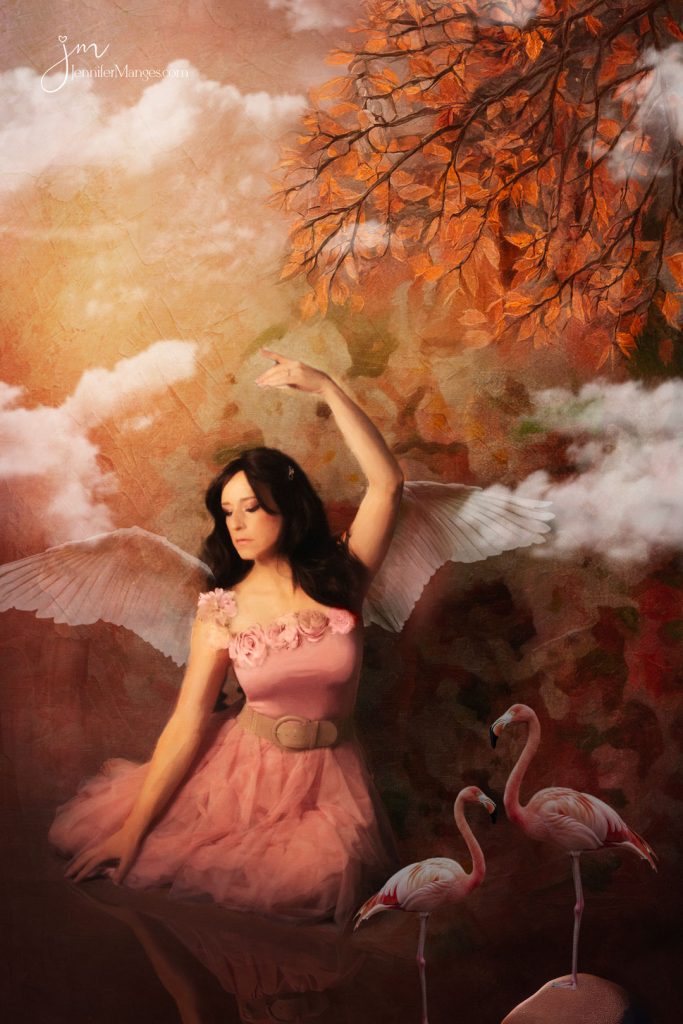
Today we’re going to talk about a subject near and dear to my heart—the soul’s language of expression. In other words, we’re going to talk about creativity. But before you shut down with thoughts like “I’m not creative” give this article a try. You just might walk away with a new perspective about what it means to be creative. And why it can benefit you to practice creativity in your life.
Let’s start by establishing some facts. Creativity isn’t just about making art or coming up with clever ideas—it’s a powerful force with measurable effects on the brain and overall well-being. Scientists define creativity as the ability to generate something both new and useful, often through two processes: divergent thinking (coming up with many possibilities) and convergent thinking (choosing and refining the best ones).
Brain imaging studies show that creativity draws upon multiple networks, including the default mode network (linked to imagination and daydreaming) and the executive control network (responsible for focus and evaluation). These systems work together to spark fresh ideas, filter them, and bring them to life.
Beyond innovation, the benefits of creativity ripple into nearly every part of life. Engaging in creative expression—whether writing, painting, gardening, or music—has been shown to reduce stress, ease symptoms of anxiety and depression, and even build resilience against cognitive decline as we age. Creative activities help people process difficult emotions, find meaning, and boost self-esteem through the act of making something tangible. They also invite “flow” states.
Research suggests that environments that encourage novelty, rest, and freedom to explore naturally foster more creativity. In this way, making space for creativity is scientifically grounded way to support mental health, strengthen the brain, and live with greater clarity and purpose.
Now, you may be saying to yourself: “This is all great if you’re creative, but I’m not.” Well, the truth is this:
Every person is creative.
Creativity is not confined to the arts, but the arts are a perfect place to practice creativity. And anyone can practice.
The reality is: We are all creating every moment of every day. Every time you clean up a space, you are creating order our of chaos. Every thought that leads to an action is a creation in motion. Every solution you find to a problem—that’s creativity applied to life. We are all creators; we are all creative. It is our birthright to learn to accept our identity as creators and then practice creating with intention.
My creative life—which led me to coin the phrase “heart habit™”—is an area where I have steadfastly practiced including my heart in the conversation of my life, or, to put it another way, where I have practiced freedom of exploration. If my heart told me to learn to draw; I learned to draw. If it told me to try painting; I tried painting. If I felt to arrange flowers, learn to make handmade books, sew, learn pattern design, write a song, animate a music video, etc. I did it. Even if I didn’t know how. And I’ve done this ever since I was a child.
What I have learned from following this inner voice is that there is always a gift in complying with my intuition. Even if that gift is simply processing an emotion, learning a new skill, or gaining an appreciation for another artisan’s craft. Listening to my heart in creative matters has blessed me with growth, a pretty wide skillset, and benefitted my well-being during times of stress.
The creative arts offer a safe space to practice listening your heart–the creative arts are a safe place to experiment, learn, play and grow. No audience required.
Because I can see how big a part creativity played in my mental, emotional and physical well-being over the years, I’ve come to see it as a powerful healing tool. Creativity expresses what words cannot. It’s a soul-language that makes space for emotion to move through you, instead of staying stuck inside of you. You don’t need to be an artist to benefit from a creative arts practice.
If you’ve signed up for my newsletter, you’ve probably seen that I include within it weekly journal prompts and creative ideas that augment each Heart Habit™ article. Let’s look at some benefits to participating in these activities:
The journal prompts are meant to be approached as a non-judgmental way to foster greater self-understanding. There are many science-based benefits to journaling and creative writing. Let’s look at a few:
1). Journaling reduces stress and emotional distress. Expressive writing has been shown to lower perceived stress and depressive symptoms by allowing individuals to process emotional events more effectively. (Smyth, J. M. (1998). Written emotional expression: Effect sizes, outcome types, and moderating variables. Journal of Consulting and Clinical Psychology, 66(1), 174–184.)
2). Journaling boosts immune function.
People who wrote about emotional topics showed improvements in immune markers and reduced illness-related doctor visits. (Pennebaker, J. W., Kiecolt-Glaser, J. K., & Glaser, R. (1988). Disclosure of traumas and immune function: Health implications for psychotherapy. Journal of Consulting and Clinical Psychology, 56(2), 239–245.)
3). Writing may support faster physical recovery.
Studies have found that expressive writing can lead to faster healing in medical patients and fewer immune-related symptoms. (Low, C. A., Stanton, A. L., & Danoff‐Burg, S. (2006). Expressive disclosure and benefit finding among breast cancer patients: Mechanisms for positive health effects. Psychology & Health, 21(1), 21–36.)
4). Journaling improves working memory and cognitive processing.
Writing about personal experiences can reduce cognitive load and increase available working memory. (Klein, K., & Boals, A. (2001). Expressive writing can increase working memory capacity. Journal of Experimental Psychology: General, 130(3), 520–533.)
5). Reflection through writing promotes meaning-making and personal insight.
Journaling helps individuals reframe stressful events and create narrative coherence, leading to greater psychological resilience. (Pennebaker, J. W. (1997). Writing about emotional experiences as a therapeutic process. Psychological Science, 8(3), 162–166.)
6). Journaling reduces symptoms of anxiety and depression.
Participants engaging in expressive writing showed significant mood improvements compared to control groups. (Hunt, C. J., & Walker, G. A. (2014). Anxiety and expressive writing: An experimental study. British Journal of Occupational Therapy, 77(10), 530–536.)
7). Gratitude journaling improves emotional well-being.
Focused journaling on positive experiences and gratitude has been linked to higher life satisfaction and reduced negative affect. (Emmons, R. A., & McCullough, M. E. (2003). Counting blessings versus burdens: An experimental investigation of gratitude and subjective well-being in daily life. Journal of Personality and Social Psychology, 84(2), 377–389.)
And 8). Journaling supports behavior change and self-regulation.
Writing about goals and self-directed behavior increases follow-through and clarity of intention.
(King, L. A. (2001). The health benefits of writing about life goals. Personality and Social Psychology Bulletin, 27(7), 798–807.)
The creative prompts that I include in my newsletter, are meant to encourage experimentation with creative mediums as a way to invite the intuitive expressive sides of the self into the conversation, revealing and releasing what words cannot express. There are many science-based benefits to creative arts exploration. Let’s look at a few of those as well:
1). Engaging in creative arts reduces anxiety and stress.
Art-making has been shown to decrease cortisol levels (the body’s primary stress hormone), even in non-artists. (Kaimal, G., Ray, K., & Muniz, J. (2016). Reduction of cortisol levels and participants’ responses following art making. Art Therapy, 33(2), 74–80.)
2). Artistic expression improves mood and emotional resilience.
Visual art interventions significantly increase positive emotions while reducing symptoms of distress and depression. (Stuckey, H. L., & Nobel, J. (2010). The connection between art, healing, and public health: A review of current literature. American Journal of Public Health, 100(2), 254–263.)
3). Creative arts therapies support trauma recovery and emotional regulation.
Art therapy allows individuals to process trauma and regulate emotions nonverbally, aiding healing. (Malchiodi, C. A. (2012). Art therapy and health care. Guilford Press.)
4). Artistic activities reduce symptoms of PTSD.
Studies show that expressive arts therapies can decrease intrusive thoughts and emotional numbing in trauma survivors. (Chapman, L., Morabito, D., Ladakakos, C., Schreier, H., & Knudson, M. M. (2001). The effectiveness of art therapy interventions in reducing post-traumatic stress disorder (PTSD) symptoms in pediatric trauma patients. Art Therapy, 18(2), 100–104.)
5). Creative arts enhance neuroplasticity and cognitive processing.
Artistic engagement activates multiple brain regions and improves connections associated with attention, memory, and problem-solving. (Bolwerk, A., Mack-Andrick, J., Lang, F. R., Dörfler, A., & Maihöfner, C. (2014). How art changes your brain: Differential effects of visual art production and cognitive art evaluation on functional brain connectivity. PLoS One, 9(7), e101035.)
6). Creating art improves divergent thinking and innovation.
Artistic exploration stimulates ideation, flexibility in thinking, and complex problem-solving.
(Zabelina, D. L., & Robinson, M. D. (2010). Creativity as flexible cognitive control. Psychology of Aesthetics, Creativity, and the Arts, 4(3), 136–143.
7). Making art supports motor coordination and sensory integration.
Engaging in painting, sculpting, and craft-based arts boosts fine motor skills and cross-hemispheric brain activity. (Schlaug, G. (2015). Musicians and music making as a model for the study of brain plasticity. Progress in Brain Research, 217, 37–55.)
8). Participation in the arts can slow cognitive decline.
Older adults involved in regular artistic activities show improved brain health and delayed onset of dementia symptoms. (Noice, T., Noice, H., & Kramer, A. F. (2014). Participatory arts for older adults: Benefits and challenges. Gerontologist, 54(5), 741–753.)
9). Artistic exploration strengthens self-awareness and identity.
Creative expression provides a safe channel for exploring personal narratives and identity development. (Pizarro, J. (2004). The efficacy of art and writing therapy: Increasing positive mental health outcomes and participant retention after domestic violence. Journal of the American Art Therapy Association, 21(1), 5–12.)
And 10). Creativity increases sense of meaning and purpose.
Engaging in the arts fosters life satisfaction, personal agency, and psychological well-being.
(Forgeard, M. J. C., & Elstein, J. G. (2014). Advancing the clinical science of creativity. Frontiers in Psychology, 5, 613.)
Now, I want to just take a moment to acknowledge that I’m not offering any type of “therapy” in these articles, in the newsletter, on the website–or any other form of communication–but I am encouraging creative play, creative exploration, and creative participation as a way to reap the benefits associated with creativity.
In the end, we are all creators, creating all the time, so it behooves us to ask: What are we creating? Your outcomes in any endeavor reveal your thoughts–the seed where all creation begins. Developing awareness (which we’ll talk about in an upcoming article) helps us to be more intentional creators. As we gain more awareness of thought, as we engage in activities that help us process as we are in process, we can shift negative mindsets toward the light. There are many tools to help us along the way. You just need to find the right ones for you. Exploring options is a great place to begin. And giving yourself space to believe you are creative can be a helpful mindset to nurture as a child of God on the journey of becoming.
Heart Habit™ Practice:
Find a quiet place. Take three deep breaths, and on each exhale, release the thought: “I am not creative.”
Place a hand over your heart and ask: “What is one small creative impulse stirring in me today?” Don’t judge it. It could be doodling, rearranging a shelf, cooking something new, humming a melody, or even problem-solving.
Give yourself 15–20 minutes to act on that impulse. Approach it as play—no pressure, no outcome needed.
Afterward, reflect: What shifted in my mood, body, or my perspective after giving my creativity space?
The content of this podcast is intended for personal reflection and informational purposes only. It is not a substitute for qualified professional medical, psychological, or spiritual advice. By engaging with the content in this podcast, through any source—in person or online—you are agreeing to the terms and conditions in our liability and release waivers. The links are posted in the show notes and on our website. All views expressed — including interpretations of scripture or spiritual practice — reflect the host’s personal experience and are not affiliated with any specific church or institution. Please take what resonates with your journey, and leave the rest with care.


Join the List
Stay up to date & receive the latest posts in your inbox.