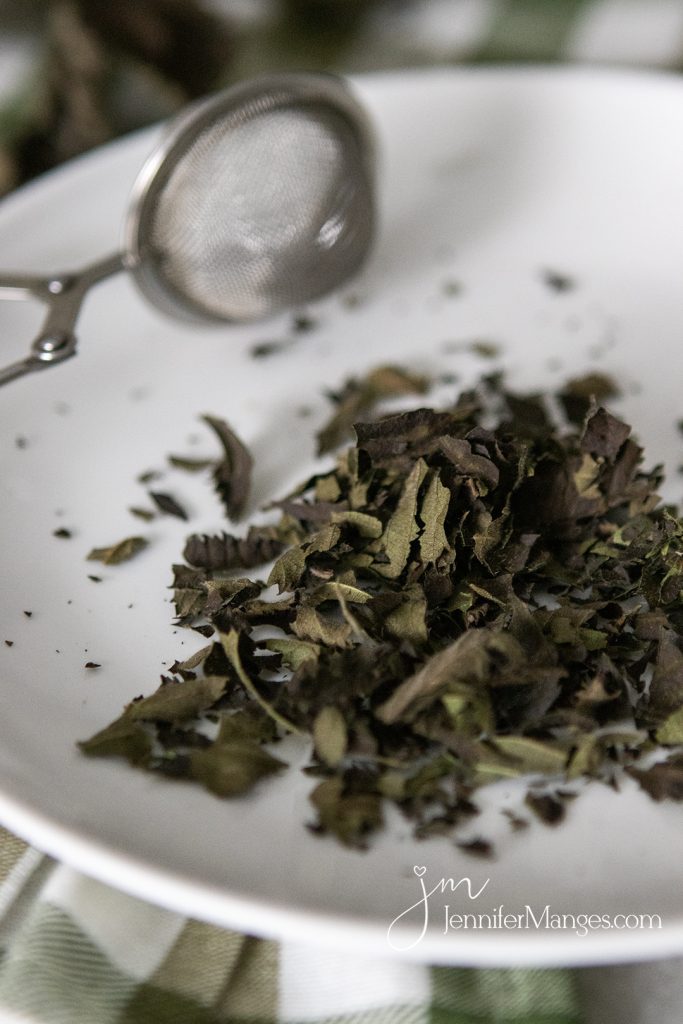
Making Blackberry Tea Leaves

We have had an unusually long and warm fall. Unfortunately, because of a major family emergency, travel, and a personal medical issue, I did not get to fall garden prep until recently. That means long hours in the garden and a very tired me. BUT because the weather has been so nice, I’ve been able to harvest a few things that are still thriving–blackberry leaves, herbs, dried flowers, and lavender. 🙂

Processing blackberry leaves is pretty simple. Simply cut your leaves and brush off any dirt. If you must wash them, make sure they are completely dry before you try and process them. There are three ways to do this:
Ways to Dry Blackberry leaves for Tea
1). Dehydrate them – This is the method I prefer. It took 10 hours on 135 degrees in my dehydrator. Yours may take longer, or less time depending on your humidity and other factors.
2). Oven Method – Set oven to 180 degrees (or the lowest temperature) and bake 1-4 hours, or until the leaves become brittle. You have to check the leaves every 5-10 minutes and leave the oven door cracked open for moisture to escape.
3). Hang Dry – Gather your leaves in small bundles, tie them together with jute or a rubber band and hang them in a warm, dry, well-ventilated place out of direct sunlight until brittle.

Store your dried leaves in an airtight container in a cool, dark, dry place away from direct sunlight.
I don’t recommend drinking blackberry leaf tea as is. Even with a little honey is has a very ‘plant’ taste. Combining it with some peppermint leaves or other herbs, like marshmallow root can improve the taste, but despite it’s flavor, blackberry leaf has many potential benefits.
Benefits of Blackberry Leaf Tea
1. Rich in antioxidants
Blackberry leaves contain high levels of flavonoids and tannins, which help neutralize free radicals, reduce oxidative stress, and support overall cellular health.
2. Naturally anti-inflammatory
Its anti-inflammatory compounds may help calm inflammation in the body, ease joint discomfort, and support recovery after illness or physical strain.
3. Supports oral and gum health
Blackberry leaves are traditionally used as a mouth rinse because their astringent tannins help tighten tissues, reduce gum bleeding, and soothe sore throats or mouth ulcers.
4. Aids digestion
The astringent quality also helps tone the digestive tract, making blackberry leaf tea helpful for easing mild diarrhea, soothing irritated stomachs, and supporting healthy digestion.
5. Immune-supportive
Vitamins, minerals, and antioxidants in the leaves offer gentle immune support and may help the body resist seasonal stressors.

6. Menstrual support
Blackberry leaf tea has been used historically to ease menstrual cramps due to its mild antispasmodic and astringent qualities.
7. Supports respiratory health
Warm blackberry leaf tea can help soothe sore throats and mild coughs, making it a comforting herbal ally in colder seasons.
8. Helps regulate blood sugar
Some studies suggest blackberry leaves may support balanced blood sugar levels due to their antioxidant profile and effect on metabolic pathways.
9. Skin health from within
The antioxidants and anti-inflammatory compounds may contribute to clearer, calmer skin when used regularly as part of a wellness routine.
10. Naturally caffeine-free
Perfect for evening rituals or those avoiding caffeine while still wanting a flavorful, grounding herbal tea.

Herbal tea is a go-to in our house during the winter season to bolster the immune system and augment healing from illness. Herbs are easy to grow in a pot, or in the garden. They can provide a sense of self-reliance and add beauty to the heart and the landscape. Just harvesting them is a sensory delight. And they’re great for gift giving, fresh or dried.
Do you grow any herbs? if so, what’s your favorite way to use them?







Join the List
Stay up to date & receive the latest posts in your inbox.